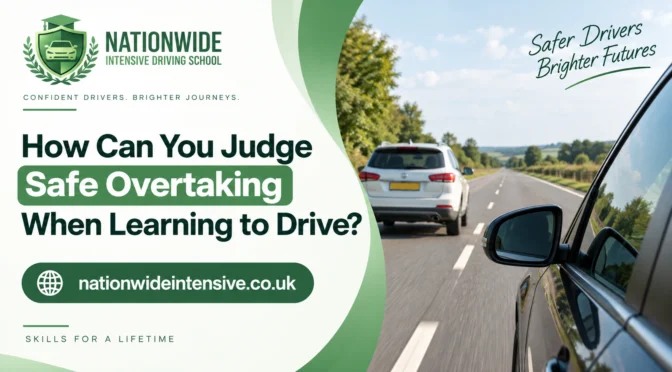
Safe overtaking is mainly about visibility, speed, distance, road conditions and having enough time to complete the manoeuvre safely. As an experienced driving instructor, I tell learners not to think, “Can I squeeze past?” Instead, ask, “Can I overtake and return to my lane with plenty of time and space?” If you can’t clearly see the road ahead or you’re unsure about the situation, wait. A few extra seconds behind a slower vehicle is far safer than forcing an overtaking manoeuvre.
Overtaking can feel intimidating when you’re learning to drive.
You’re behind a slow-moving vehicle, the road ahead looks clear and you start thinking:
“Should I overtake?”
Then another thought appears:
“What if a car comes around the corner?”
So you stay behind.
Then you wonder whether you should have gone.
If this sounds familiar, don’t worry. Overtaking is a judgement skill, and it takes experience to become comfortable with it.
As a driving instructor, I’d much rather see a learner wait for a genuinely safe opportunity than attempt an overtake simply because they feel pressured by the vehicle behind them.
Let’s look at how you can judge overtaking more confidently and safely on UK roads.
What Makes an Overtaking Manoeuvre Safe?
Before overtaking, you need to consider several things at the same time:
- Is the road ahead clearly visible?
- Is there enough distance to complete the manoeuvre?
- How fast is the vehicle you’re overtaking?
- How fast can you safely accelerate?
- Is another vehicle approaching?
- Are there bends, junctions or hazards ahead?
- Is the road wide enough?
- Can you return to your lane safely?
If you’re unsure about any of these, wait.
Overtaking isn’t a race.
1. Look Far Enough Ahead
One of the biggest mistakes learners make is looking only a short distance ahead.
You need enough visibility to understand what’s coming.
A long straight road with good visibility may provide a better opportunity than a road with:
- A sharp bend
- A hill
- A concealed junction
- Parked vehicles
- Pedestrians
- Cyclists
- Poor visibility
If you can’t see what’s beyond the vehicle you’re overtaking, you don’t have enough information to make a confident decision.
2. Consider the Speed of the Vehicle You’re Passing
Imagine you’re following a vehicle travelling at 30 mph.
You pull out to overtake, but the vehicle is actually travelling faster than you expected.
Now your overtaking manoeuvre takes longer.
This is why you need to consider the relative speed between your vehicle and the vehicle you’re passing.
The greater the speed difference, the more quickly you may complete the manoeuvre, but that doesn’t mean you should drive aggressively.
Your speed must always remain appropriate for the road and conditions.
3. Make Sure You Have a Clear View of Oncoming Traffic
This is critical.
Before overtaking on a two-way road, you need to know what’s happening ahead.
Don’t assume the road is clear simply because you can’t currently see another vehicle.
A bend, crest or obstruction can hide approaching traffic.
If you can’t see far enough ahead, don’t overtake.
Wait until your view improves.
This is one of the simplest rules to remember during Driving Lessons Morden:
If you can’t see it, you can’t safely judge it.
4. Check Your Mirrors Before Moving Out
Overtaking isn’t only about what’s in front of you.
You also need to know what’s happening behind.
A vehicle may already be overtaking you.
Before changing position, check your mirrors and make sure your intended manoeuvre won’t interfere with another road user.
This is where good observation becomes important.
Develop the habit of thinking about the whole traffic environment, not just the vehicle immediately in front.
5. Don’t Let the Driver Behind Pressure You
This happens frequently.
You’re behind a slow vehicle.
A car appears behind you.
You imagine the driver is getting impatient.
Suddenly, you feel you have to overtake.
You don’t.
Another driver’s impatience isn’t a reason to take a risk.
If the conditions aren’t right, stay behind the slower vehicle.
A safe driver is comfortable saying:
“Not yet.”
The opportunity will come.
6. Think About Where You’ll Return
Don’t focus only on getting past the vehicle.
You also need to consider what happens afterwards.
Ask:
Where will I return to my lane?
Is there enough space?
Will I need to slow down immediately?
Is there a hazard ahead?
For example, overtaking a slow vehicle immediately before a junction may not be sensible if you then have to change position again.
Think about the entire manoeuvre, not just the first few seconds.
7. Don’t Overtake Near Places Where Visibility Is Restricted
Certain road situations can make overtaking particularly risky.
Be extremely cautious around:
- Bends
- Crests
- Junctions
- Pedestrian crossings
- Narrow roads
- Areas with parked vehicles
- Roads with limited visibility
The exact circumstances matter, but the principle is simple:
The less you can see, the less information you have to make a safe decision.
8. Remember That Waiting Is a Driving Skill
Some learners think good drivers are constantly overtaking.
That’s not true.
Good drivers know when not to overtake.
You might follow a slow vehicle for several minutes because the road conditions don’t provide a suitable opportunity.
That’s perfectly acceptable.
Driving isn’t about getting everywhere as quickly as possible.
It’s about making safe, sensible decisions.
9. Practise Overtaking With Your Instructor
Don’t try to teach yourself overtaking through trial and error.
It’s much better to learn the process with an experienced instructor.
During Driving Lessons Morden, your instructor can help you understand:
- When an overtaking opportunity is developing.
- What information to look for.
- How to assess approaching traffic.
- How to maintain appropriate speed.
- When to abandon an overtake.
- How to return safely to your lane.
They can also explain why a particular situation is suitable or unsuitable.
That feedback is extremely valuable because learners don’t always recognise the risks they’re missing.
10. Build Up Your Confidence Gradually
If overtaking makes you nervous, don’t expect to become comfortable immediately.
Start by observing your instructor.
Watch how they assess:
Visibility → traffic → speed → distance → road conditions → escape space.
Then, when you’re ready, take responsibility for the decision yourself.
Eventually, you’ll begin recognising suitable opportunities without having to consciously analyse every detail.
Can an Intensive Driving Course Help With Overtaking?
It can, particularly if you need more road experience.
An Intensive Driving Course Morden gives you the opportunity to practise frequently over a shorter period.
You can work on overtaking alongside other important skills such as:
- Mirror checks
- Hazard awareness
- Road positioning
- Speed control
- Dual carriageway driving
- Independent driving
- Forward planning
The advantage of concentrated practice is that you don’t have to wait a full week before applying what you learned.
For some learners, that repetition helps build better judgement and confidence. Nationwide Intensive LTD. is here to help you with this.
What If You’re Still Unsure Whether to Overtake?
Use this simple rule:
If you aren’t confident that you have enough visibility, time and space, don’t go.
There’s no prize for overtaking first.
Stay behind, maintain a safe following distance and wait for a better opportunity.
As you gain experience, you’ll become better at identifying situations where an overtake is appropriate. Contact us today.
Frequently Asked Questions
How do I know when overtaking is safe?
You need sufficient visibility, time and space to complete the manoeuvre safely. You should also consider your speed, the speed of the vehicle you’re passing, approaching traffic and what happens after you return to your lane.
Should learner drivers overtake?
Learners should learn how to assess overtaking situations as part of their driving education. However, they should never feel pressured to overtake when the conditions aren’t clearly safe.
Why do I struggle to judge overtaking gaps?
Gap judgement develops through experience. Your instructor can help you understand the relationship between vehicle speed, distance, visibility and the time required to complete an overtaking manoeuvre.
Should I overtake if the driver behind me is impatient?
No. Another driver’s impatience shouldn’t influence your safety decisions. If the conditions aren’t suitable, wait for a safer opportunity.
Can an intensive driving course improve overtaking confidence?
Concentrated driving practice can give you more opportunities to experience different traffic situations and develop your observation and decision-making skills.
Is overtaking necessary to pass the UK driving test?
You aren’t expected to force an overtaking manoeuvre simply to demonstrate that you can overtake. The examiner is interested in safe, competent driving and appropriate decisions for the circumstances.
