How Can You Save Money on Driving Lessons Without Compromising on Quality?

Yes, you can save money on driving lessons without choosing the cheapest instructor. The best way is to learn with a qualified instructor, practise consistently, avoid long gaps between lessons, and consider an intensive course if you want to pass more quickly. Paying a little more for quality tuition often works out cheaper in the long run because you may need fewer lessons overall.

If there’s one thing I’ve noticed after helping learner drivers over the years, it’s that many people focus only on the hourly price of a lesson. I understand why it feels like the easiest way to save money. But in reality, the cheapest lesson isn’t always the best value.

A good instructor teaches you correctly from the beginning, helping you build confidence and avoid bad habits that could cost you extra lessons later.

One tip I always give learners is to book lessons regularly. If you have one lesson, then wait three or four weeks before the next one, you’ll probably spend the first part of each lesson remembering what you learned before. That means you’re paying to relearn instead of making progress.

Another smart way to save money is by practising whenever you can with a supervising driver, provided you’re legally insured and following UK learner driver rules. Even short practice sessions can improve your confidence and make your professional lessons more productive.

For learners with busy schedules, an Intensive Driving Course South Croydon can also be a cost-effective option. Instead of spreading lessons over several months, you complete your training within a shorter period. Many learners find this helps them retain information better and reach test standard sooner. If you’re comparing your options, it’s worth looking at different intensive course packages to see which one suits your learning style and budget.

If you live locally, choosing Driving Lessons South Croydon with an experienced instructor who knows the local test routes can also make a real difference. Local knowledge often means you spend more time learning the roads and situations you’re likely to face during your practical test, rather than driving around unfamiliar areas.

It’s also worth remembering that passing first time can save you a significant amount of money. Every failed test could mean paying for another test fee and several additional lessons. That’s why quality instruction is an investment rather than simply another expense.

At the end of the day, learning to drive isn’t about finding the lowest hourly rate. It’s about getting the right guidance so you become a safe, confident driver while spending less overall.

If you’re based in South London, it’s worth exploring the available Driving Lessons South Croydon and comparing them with an Intensive Driving Course South Croydon. Depending on your experience, schedule and confidence level, one option may help you reach your full licence faster while keeping your overall learning costs under control.
What Is the Fastest Way to Pass Your UK Driving Test?

When people ask me how to pass their driving test quickly, my answer is always the same: don’t focus on passing fast;focus on learning properly. Funny enough, that’s usually what helps people pass sooner.

As a driving instructor, I’ve taught learners with all kinds of schedules. Some had months to prepare, while others needed a licence as quickly as possible for a new job or university. The learners who made the fastest progress weren’t always the most experienced;they were the ones who practised regularly and stayed committed.

One option that works well for many people is choosing an Intensive Driving Course Mitcham instead of taking one lesson each week. Rather than forgetting what you learned between lessons, you build on your skills every day. That means fewer setbacks and a more confident approach behind the wheel.

Start With the Right Driving Instructor

A good instructor doesn’t just teach you how to drive; they teach you how to think like a safe driver.

If you’re booking Driving Lessons Mitcham, look for an instructor who explains mistakes clearly, keeps lessons relaxed, and tailors the training to your confidence level. Every learner is different, so a personalised approach can make a huge difference.

Practise Between Lessons

Driving lessons are important, but extra practice can speed up your progress even more if you have access to a suitable supervising driver.

The more real-world situations you experience, the more natural driving becomes. Try driving in different conditions, including busy roads, residential streets, roundabouts, and parking areas.

Learn the Test Routes; But Don’t Memorise Them

Many learners spend too much time trying to memorise possible driving test routes.

Instead, learn the skills you’ll need wherever the examiner takes you. Good observation, proper mirror checks, correct positioning, and smooth decision-making matter far more than knowing every road.

Consider an Intensive Course If You’re Short on Time

If you need your licence quickly, an intensive course can be a practical solution.

Instead of spreading lessons over several months, intensive courses group your training into a shorter period. Many learners find this helps them stay focused and build confidence faster.

If you’re based in South London, you can find more information about Driving Lessons Mitcham through Nationwide Intensive, where flexible lesson options are available for learners at different experience levels. They also provide Intensive Driving Course Mitcham options as part of their wider intensive driving programmes across London, making it easier to choose a course that suits your timetable.

Don’t Rush the Test Date

Booking your practical test before you’re ready often leads to unnecessary stress and extra expense.

A better approach is to let your instructor guide you. When you’re consistently driving safely without reminders, that’s usually a good sign you’re ready.

Final Thoughts

Passing your UK driving test quickly isn’t about luck or shortcuts. It’s about learning consistently, practising regularly, and getting the right support. Whether you choose weekly lessons or an intensive course, building safe driving habits is what ultimately leads to success; and a driving licence you’ll feel confident using every day.

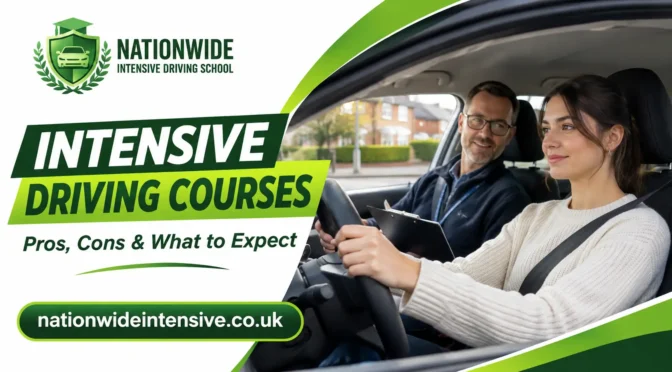
Are Intensive Driving Courses Worth It? Pros, Cons and What to Expect

Yes, intensive driving courses are worth it for many learners, especially if you want to pass your driving test quickly and can dedicate several days to learning. They aren’t the perfect option for everyone, but if you’re motivated and have enough time to focus, they can help you build confidence and driving skills much faster than weekly lessons.

If you’d asked me a few years ago whether I’d recommend an intensive driving course, I probably would’ve said it depends. After working with learner drivers and seeing different learning styles, I’ve realised that intensive courses can be a fantastic choice;but only if they suit your circumstances.

One of the biggest advantages is how quickly you progress. Instead of having one lesson a week and forgetting half of what you learned before the next one, you’re driving every day. That repetition really helps build confidence. Many learners find they improve much faster because they’re constantly practising the same skills.

Another benefit is that you’re more likely to stay focused on your goal. If you’re hoping to get on the road for work, university, or family commitments, an Intensive Driving Course Surbiton can be a practical way to prepare for your practical test in a shorter timeframe.

That said, intensive courses aren’t suitable for everyone.

If you get tired easily, struggle with concentration for long periods, or prefer learning at a slower pace, traditional weekly lessons may be a better fit. Driving involves learning new skills, making quick decisions, and staying alert, so it’s important to choose the approach that matches your learning style rather than simply the fastest option.

What should you expect from an intensive driving course?

Most intensive courses begin with an assessment or discussion about your current driving experience. From there, your instructor creates a schedule based on your ability and your target test date.

During the course, you’ll usually cover:

  • Vehicle controls and road positioning
  • Junctions and roundabouts
  • Dual carriageways and higher-speed roads
  • Parking manoeuvres
  • Independent driving
  • Mock driving tests
  • Test-day preparation

The pace is quicker than standard lessons, but a good instructor will still make sure you’re learning safely and confidently.

If you’re based in Surrey, it’s worth looking for professional Driving Lessons Surbiton before booking a course. Having experienced instructors who understand local test routes and common driving challenges can make a noticeable difference to your confidence and overall progress.

One thing I always tell learners is this: don’t choose an intensive course simply because it’s quick. Choose it because you’re ready to commit your time and effort. The more engaged you are, the better your results are likely to be.

Whether you’re completely new to driving or already have some experience, taking the time to compare different course options and instructors is worthwhile. A structured programme, such as those offered through Nationwide Intensive’s Surbiton driving lessons and London intensive driving course options, can help you decide which learning path best suits your needs without feeling overwhelmed.

In the end, there’s no single “best” way to learn to drive. The right choice is the one that fits your schedule, confidence level, and learning style. If those things line up, an intensive course can be one of the quickest and most rewarding ways to earn your driving licence.

How Many Driving Lessons Does It Really Take to Pass Your Test in the UK?

Most learners in the UK need around 40–50 hours of professional driving lessons, along with extra private practice, before they are ready to pass their practical driving test. However, the exact number depends on your confidence, previous experience, learning style, and how often you practise.

If there’s one question I hear almost every week as a driving instructor, it’s, “How many lessons will I actually need to pass?”

The honest answer is that there’s no magic number.

Over the years, I’ve taught learners who passed after just a few weeks of focused training, while others needed a little longer to build confidence. Everyone learns at a different pace, and that’s completely normal.

What Affects the Number of Driving Lessons?

Several factors can influence how quickly you become test-ready.

  • Whether you’ve driven before.
  • How often you take lessons.
  • If you can practise with a family member between lessons.
  • Your confidence behind the wheel.
  • Whether you’re learning in a manual or automatic car.

Someone taking one lesson every fortnight may take much longer to progress than someone who drives several times a week.

Is There a Faster Way to Learn?

For many learners, the answer is yes.

An Intensive Driving Course Sutton can help you build skills much more quickly because you’re practising consistently instead of forgetting what you learned between weekly lessons. Many people choose this option if they have a deadline, such as starting a new job or heading to university.

Rather than spreading lessons over several months, intensive courses allow you to stay focused and develop confidence day after day.

If you’re interested in learning more about intensive training across London, it’s worth exploring the different course options available through Nationwide Intensive’s London programmes to see which one suits your experience and schedule.

Are Weekly Lessons Still a Good Choice?

Absolutely.

Not everyone can dedicate several consecutive days to learning. Traditional Driving Lessons Sutton remain a great choice for learners who prefer a steady pace or have busy work and family commitments.

The key isn’t whether you learn quickly or slowly; it’s learning safely and consistently.

My Advice as an Instructor

One mistake I often see is learners comparing themselves to friends.

Someone might say they passed after 20 lessons, while another needed 60. That doesn’t mean either person was a better driver. Different roads, different instructors, different confidence levels and different learning styles all make a difference.

Instead of focusing on the number of lessons, concentrate on becoming a safe, confident driver. Passing the test is important, but driving safely for years afterwards is the real goal.

If you’re based in Sutton, choosing an instructor who understands the local roads and test routes can also make the learning process feel much more comfortable and familiar.

At the end of the day, whether you choose weekly lessons or an intensive course, consistent practice and good instruction will always give you the best chance of passing your test with confidence.