
Tag Archives: Intensive Driving Course

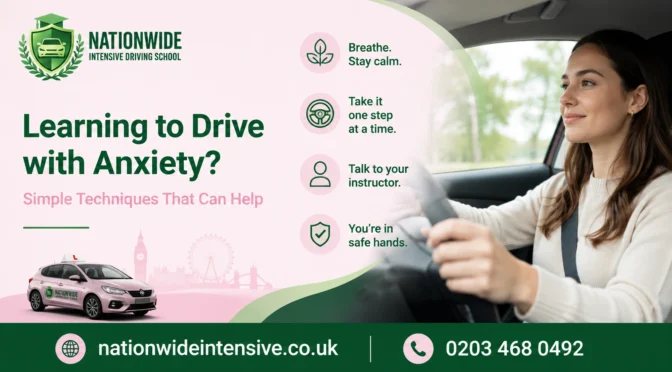
Learning to Drive with Anxiety? Simple Techniques That Can Help

Feeling anxious during driving lessons is far more common than you might think. In my experience as a driving instructor, many learner drivers worry about making mistakes, stalling the car, or failing their practical driving test. The good news is that driving anxiety can be managed. With the right instructor, consistent practice, and a few simple techniques, most learners gradually replace fear with confidence and become safe, capable drivers.

If you’ve ever felt nervous before a driving lesson, you’re definitely not alone.

I’ve taught learners who were so anxious before their first lesson that they considered cancelling altogether. Some worried about holding up traffic, while others were convinced they’d never be able to drive on busy roads.

A few months later, those same learners were confidently navigating roundabouts, parking independently, and passing their practical driving test.

That’s why I always tell nervous learners one thing:

Being anxious doesn’t mean you can’t become a good driver.

It simply means you’re stepping outside your comfort zone, and that’s exactly where learning happens.

Let’s look at why driving anxiety happens and what you can do to manage it.

Why Do So Many Learners Feel Anxious?

Learning to drive is one of the biggest new skills most people take on.

You’re expected to:

  • Control the vehicle.
  • Watch other road users.
  • Read road signs.
  • Make safe decisions.
  • Use observation routines.
  • Follow the Mirror-Signal-Manoeuvre (MSM) routine.
  • Stay calm under pressure.

That’s a lot for anyone, especially during the early stages of learning.

Feeling nervous doesn’t mean you’re doing something wrong,it means your brain is processing a lot of new information at once.

1. Accept That Anxiety Is Normal

One mistake many learners make is believing they should feel confident straight away.

The reality is very different.

Over the years, I’ve worked with hundreds of learner drivers, and many of the people who were most anxious at the beginning eventually became some of the safest drivers.

Confidence doesn’t come before experience.

It comes because of experience.

Every successful lesson gives your brain more evidence that you can handle the next one.

2. Tell Your Instructor How You’re Feeling

This is one of the simplest but most effective things you can do.

If your instructor knows you’re feeling anxious, they can adapt the lesson to suit your confidence level.

That might mean starting with:

  • Quiet residential roads.
  • Simpler junctions.
  • Lower speed limits.
  • Shorter driving sessions.

As your confidence grows, your instructor can gradually introduce more challenging situations.

During Driving Lessons Broad Green, a patient instructor should help you progress at a pace that feels challenging but not overwhelming.

3. Focus on One Skill at a Time

When learners feel anxious, they often try to think about everything at once.

Instead, narrow your focus.

For example, spend one lesson concentrating on:

  • Smooth clutch control.
  • Mirror checks.
  • Roundabouts.
  • Parking manoeuvres.
  • Lane positioning.

Breaking driving into smaller skills makes it feel much more manageable.

Small improvements soon add up to big progress.

4. Stop Comparing Yourself to Other Learners

One learner passes after 25 hours.

Another needs 50.

Both receive the same full UK driving licence.

I’ve seen learners become discouraged because their friend passed first time.

What they don’t see is the amount of private practice, confidence, or previous experience that person may have had.

Your driving journey is unique.

Measure your progress against where you were last month, not against someone else.

5. Practise Positive Self-Talk

This may sound simple, but it makes a real difference.

Instead of saying:

“I’m going to stall again.”

Try saying:

“I’ve practised this before, and I know what to do.”

Your mindset affects your confidence more than many people realise.

I’ve watched learners completely change their driving simply by replacing negative assumptions with realistic expectations.

6. Build Confidence Through Repetition

Driving confidence isn’t built overnight.

It’s built through repeated success.

The more often you:

  • Move off smoothly.
  • Complete roundabouts.
  • Park successfully.
  • Handle busy roads.
  • Drive independently.

…the more automatic those skills become.

Eventually, you’ll stop thinking about every individual action and start focusing on the road ahead.

That’s when driving begins to feel much easier.

7. Consider an Intensive Driving Course

Some learners find that weekly lessons leave too much time between sessions.

By the next lesson, they’ve forgotten some of what they learned previously.

An Intensive Driving Course Broad Green allows you to practise on consecutive days, helping you build confidence much more quickly through consistent repetition.

Many nervous learners tell me they feel more relaxed because they’re staying in a regular learning routine instead of starting from scratch each week.

8. Choose the Learning Style That Suits You

If you’re finding manual driving stressful because of clutch control and gear changes, it’s worth discussing your options with your instructor.

For some learners, automatic driving lessons reduce anxiety because they remove one part of the driving process, allowing them to focus more on road awareness and hazard perception.

Others prefer manual driving lessons because they enjoy the extra control and flexibility after passing.

The best choice is the one that helps you become a safe and confident driver.

Simple Techniques to Stay Calm Before a Lesson

If you feel anxious before driving, try these practical tips:

  • Arrive a few minutes early instead of rushing.
  • Take slow, steady breaths before getting into the car.
  • Focus on today’s lesson rather than your driving test.
  • Accept that making mistakes is part of learning.
  • Celebrate one improvement after every lesson, no matter how small.
  • Trust your instructor’s guidance.
  • Remember that confidence grows with practice, not perfection.

Even experienced drivers continue learning throughout their lives.

Frequently Asked Questions

Is it normal to feel anxious during driving lessons?

Yes. Driving anxiety is very common, especially for beginner drivers. Most learners become more confident as they gain experience and spend more time behind the wheel.

Can anxiety affect my driving test?

Yes, but good preparation, mock driving tests and regular practice can help reduce nerves and improve your confidence on the day of your practical driving test.

Should I tell my driving instructor I’m nervous?

Absolutely. A professional instructor can adapt your lessons, build confidence gradually and help you learn at a pace that’s comfortable for you.

Would an intensive driving course help with anxiety?

For many learners, yes. Intensive courses provide regular practice over consecutive days, helping build confidence and reduce uncertainty through repetition.

Should I learn in an automatic or manual car?

If gears and clutch control are increasing your anxiety, automatic lessons may feel easier. If you’re comfortable with manual driving and want greater flexibility after passing, manual lessons may still be the best option.

Final Thoughts

Learning to drive with anxiety can feel challenging, but it doesn’t have to stop you from becoming a confident driver.

In my experience, many of the learners who started out feeling the most nervous eventually became calm, capable drivers because they stayed patient, trusted the process and kept practising. Confidence isn’t something you’re born with, it’s something you build one lesson at a time.

If you’re looking for supportive Driving Lessons Broad Green,  choosing experienced instructors from Nationwide Intensive LTD., who understand nervous learners can make a huge difference to your progress. And if you’d like to build confidence through regular, focused practice, an Intensive Driving Course Broad Green could help you gain momentum and prepare for your practical driving test more quickly.

Whether you’re considering regular lessons, an intensive course, or deciding between automatic driving lessons and manual driving lessons, remember that every confident driver on UK roads was once a nervous beginner. Keep showing up, keep learning, and trust that your confidence will grow with every mile you drive.
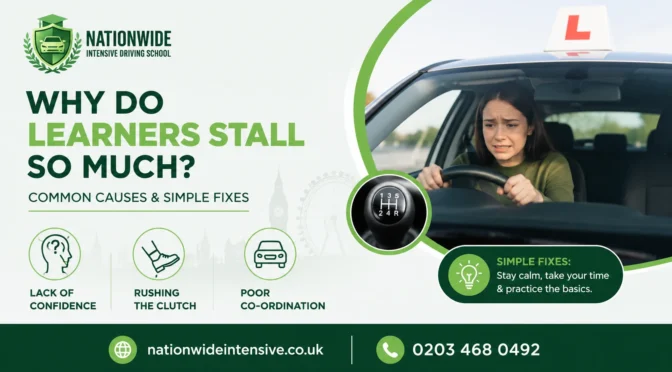
Why Do Learners Stall So Much? Common Causes and Simple Fixes

If you keep stalling during your driving lessons, don’t worry,it’s one of the most common challenges for learner drivers, especially when learning in a manual car. In my experience as a driving instructor, stalling usually happens because of clutch control, rushing to move off, or feeling nervous rather than a lack of driving ability. The good news is that once you understand why it’s happening, it’s usually one of the easiest driving habits to fix.

If you’ve ever stalled the car at a busy junction or when the traffic lights turned green, you’re definitely not the only one.

I’ve taught hundreds of learner drivers over the years, and almost every one of them has apologised after stalling.

Some even say,

“I don’t think I’ll ever get the hang of this.”

The funny thing is, a few weeks later, those same learners are moving off smoothly without even thinking about it.

Stalling isn’t a sign that you’re a bad driver. It’s simply part of learning how to control a manual car. Like every driving skill, it becomes easier with practice, confidence and the right guidance.

Let’s look at why learners stall so often and, more importantly, how you can stop it from happening.

Why Does a Car Stall?

A car stalls when the engine doesn’t receive enough power to keep running.

For learner drivers, this usually happens because the clutch is released too quickly before the engine has enough power to move the vehicle.

Although it can feel embarrassing, it’s completely normal and something every experienced driver has dealt with at some point.

The important thing is understanding why it happens so you can avoid repeating the same mistake.

1. Releasing the Clutch Too Quickly

This is by far the most common reason learners stall.

Many new drivers lift the clutch too fast because they’re eager to move away, especially when other vehicles are waiting behind them.

Instead, focus on finding the biting point.

Once you feel the car gently wanting to move forward, pause briefly before releasing the clutch fully.

In my experience, slowing this one movement down often solves most stalling problems within a couple of lessons.

2. You’re Feeling Rushed by Other Drivers

Pressure from traffic can make even confident learners panic.

You stop at a junction.

The lights change.

A car behind you starts creeping forward.

Suddenly you’re trying to move off too quickly,and the engine stalls.

Remember this:

Other drivers would rather wait a few extra seconds than see you make an unsafe decision.

Take your time, follow your Mirror-Signal-Manoeuvre (MSM) routine and move away safely instead of rushing because of pressure from other road users.

3. You’re Not Using Enough Accelerator

Another common mistake is trying to move off without giving the engine enough power.

Every car is slightly different.

Some require a little more acceleration than others before releasing the clutch.

During Driving Lessons The Wrythe, your instructor will help you understand how your training vehicle responds so moving off becomes much smoother and more consistent.

With practice, you’ll begin to recognise the sound and feel of the engine without consciously thinking about it.

4. You’re Looking at the Pedals Instead of the Road

Many learners instinctively glance down at their feet while finding the biting point.

This creates two problems:

  • You lose awareness of what’s happening around you.
  • It increases your anxiety because you’re trying to do too many things at once.

Trust your feet.

Clutch control develops through muscle memory, not by watching the pedals.

The more you practise, the more natural it becomes.

5. Test Nerves and Driving Anxiety

Something I often notice is that learners stall more during mock driving tests than during normal lessons.

Why?

Because nerves affect timing and coordination.

You start overthinking every movement:

“Is the clutch high enough?”

“Am I giving enough gas?”

“What if I stall again?”

Ironically, worrying about stalling often makes it more likely to happen.

Confidence grows through repetition, and that’s why regular driving practice is so important.

6. You’re Learning in a Manual Car

Here’s something worth remembering.

If you’re taking manual driving lessons, learning clutch control is simply part of the process.

Unlike automatic cars, manual vehicles require you to coordinate:

  • Clutch
  • Accelerator
  • Brake
  • Gear changes

That’s a lot to manage when you’re still learning road awareness, observations and hazard perception.

Be patient with yourself,it gets easier.

7. You’re Not Practising Moving Off Enough

Many learners spend lots of time practising roundabouts and parking but don’t spend enough time mastering simple moving-off exercises.

One exercise I often recommend is practising:

  • Moving off and stopping
  • Hill starts
  • Pulling over safely
  • Moving away from the kerb

Repeating these basic skills builds confidence much faster than only practising long drives.

Could an Intensive Driving Course Help?

If you’re struggling with clutch control after weeks of lessons, it may not be because you’re incapable, it could simply be because there’s too much time between sessions.

An Intensive Driving Course The Wrythe gives you the chance to practise every day instead of once a week.

Many learners find this helps build muscle memory much faster because yesterday’s lesson is still fresh in their mind.

For learners who want to improve quickly before their practical driving test, this approach can make a noticeable difference.

How to Stop Stalling More Often

If stalling is affecting your confidence, try these simple tips:

  • Slow down when releasing the clutch.
  • Learn to recognise the biting point.
  • Use gentle acceleration before moving off.
  • Don’t rush because of traffic behind you.
  • Practise hill starts regularly.
  • Stay calm if the car stalls,it happens to everyone.
  • Remember that smooth driving comes with repetition, not perfection.

Most learners are surprised by how quickly this habit improves once they stop worrying about it.

Frequently Asked Questions

Is it normal to stall during driving lessons?

Yes. Stalling is one of the most common issues learner drivers experience, especially during manual driving lessons. It becomes much less frequent as your clutch control improves.

How long does it take to stop stalling?

Every learner is different, but many drivers become much more confident after consistent practice over several lessons. Regular driving and repetition are key.

Do people fail their driving test because of stalling?

Not necessarily. A single stall doesn’t automatically mean you’ll fail your practical driving test. What matters is how safely and calmly you deal with the situation afterwards.

Are automatic driving lessons easier?

Many learners find automatic cars easier because there is no clutch pedal or manual gear changes. This allows you to focus more on road awareness and observations.

Can an intensive driving course improve clutch control?

Yes. Many learners improve more quickly during intensive courses because they practise clutch control every day, helping build confidence and muscle memory faster.

Final Thoughts

If you keep stalling during your driving lessons, don’t let it knock your confidence.

From my experience teaching learner drivers, stalling is simply one of those milestones that almost everyone goes through. Once you understand how the clutch, accelerator and biting point work together, smooth moving-offs become second nature.

If you’re looking for professional Driving Lessons The Wrythe, Nationwide Intensive LTD. is working with experienced instructors can help you build confidence and improve your clutch control step by step. And if you’d like to make faster progress, an Intensive Driving Course The Wrythe can give you the consistent practice needed to develop strong driving habits in a shorter period.

Whether you’re considering regular lessons, an intensive course, or deciding between automatic driving lessons and manual driving lessons, remember that every confident driver once stalled exactly where you are now. The difference is they kept practising,and you will too.

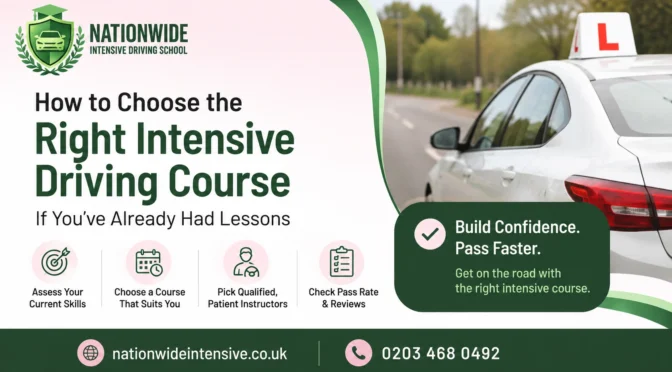
How to Choose the Right Intensive Driving Course If You’ve Already Had Lessons

If you’ve already had driving lessons, the right intensive driving course isn’t the one with the most hours, it’s the one that matches your current skill level. In my experience as a driving instructor, many learners waste time and money by booking the wrong course. A proper assessment of your driving ability, your confidence behind the wheel, and your test readiness will help you choose a course that gets you to your practical test safely and efficiently.

If you’ve already had 10, 20 or even 40 driving lessons, you might be wondering whether an intensive driving course is still worth it.

It’s a question I hear all the time from learners.

Some worry they’ve “missed the chance” to take an intensive course because they’ve already started learning the traditional way. Others think they need to begin from scratch.

The truth is, that’s rarely the case.

Over the years, I’ve helped many learner drivers switch from weekly lessons to intensive courses, and in many cases, it actually helped them progress faster. The key isn’t choosing the longest course,it’s choosing the right one for where you are in your driving journey.

Here’s how to make the right decision.

Do You Need an Intensive Driving Course If You’ve Already Had Lessons?

In many cases, yes.

An intensive driving course Belmont isn’t only for complete beginners.

It’s also ideal for learners who:

  • Have already taken professional driving lessons.
  • Feel they’ve stopped making progress.
  • Have recently failed a practical driving test.
  • Need to pass before starting a new job or university.
  • Haven’t driven for several months and need a confidence boost.

The biggest advantage is that you’re building on skills you already have instead of starting over.

Start by Being Honest About Your Current Driving Ability

One mistake I see quite often is learners overestimating or underestimating their ability.

Before booking a course, ask yourself:

  • Can I drive independently?
  • Am I comfortable on busy roads?
  • Do I still struggle with roundabouts?
  • Can I park confidently?
  • Would my instructor say I’m close to test-ready?

Your answers will help determine how many hours you actually need.

A professional Driving Lessons Belmont is often the best place to start because it gives you an honest picture of your current level.

Don’t Automatically Book the Longest Course

Many learners think:

“More hours must be better.”

Not necessarily.

If you’ve already completed plenty of driving lessons, you may only need focused practice on specific areas like:

  • Bay parking
  • Parallel parking
  • Junction observations
  • Independent driving
  • Dual carriageways
  • Test routes

Booking a course that’s much longer than necessary could increase costs without providing extra value.

The goal is to fill the gaps,not repeat everything you’ve already learned.

Choose a Course That Includes a Driving Assessment

In my experience, the best intensive courses begin with an assessment lesson.

Why?

Because no two learners are the same.

Some learners only need polishing before their practical driving test.

Others need to rebuild confidence after taking a long break.

A proper assessment allows your instructor to recommend the right number of training hours instead of asking you to guess.

Think About Your Learning Style

Everyone learns differently.

Some people improve steadily with one lesson each week.

Others learn much better when they drive every day.

I’ve worked with learners who spent months taking weekly lessons with little progress. Once they switched to an intensive course, everything started to click because they were practising consistently instead of forgetting skills between lessons.

If you learn best through repetition, an intensive course may suit you perfectly.

Decide Between Automatic and Manual

Another important decision is choosing the right transmission.

If you’re still deciding between the two, think about:

Automatic driving lessons

  • Easier for many beginners.
  • Less to think about in busy traffic.
  • Ideal for learners who feel overwhelmed by gears and clutch control.

Manual driving lessons

  • Gives you more licence flexibility.
  • Useful if you expect to drive manual cars in the future.
  • Builds additional vehicle control skills.

There’s no right or wrong answer, only the option that matches your goals and confidence.

Look Beyond the Price

It’s tempting to choose the cheapest intensive driving course.

However, the lowest price doesn’t always offer the best value.

Instead, consider:

  • Instructor experience
  • Lesson structure
  • Flexible scheduling
  • Practical test preparation
  • Mock driving tests
  • Honest progress assessments

A well-planned course that prepares you properly is usually a better investment than repeating multiple driving tests.

Keep Practising Between Sessions

Even on an intensive driving course, extra practice can make a noticeable difference.

If you have access to a supervising driver, spend time working on:

  • Mirror checks
  • Speed awareness
  • Roundabouts
  • Parking manoeuvres
  • Hazard perception
  • Observation routines

The more experience you gain, the more confident you’ll feel during your practical test.

How to Know You’ve Chosen the Right Intensive Course

A good intensive driving course should:

  • Match your current driving ability.
  • Focus on your weakest skills.
  • Include realistic mock driving tests.
  • Prepare you for independent driving.
  • Build confidence rather than simply increasing lesson hours.
  • Help you become a safe driver, not just pass the test.

That’s the difference between learning to drive and learning to pass.

Frequently Asked Questions

Can I take an intensive driving course after already having lessons?

Yes. Many learners switch to an intensive course after taking weekly lessons. It’s a great way to build momentum, improve confidence and prepare for your practical driving test more efficiently.

How many hours of an intensive course do I need?

It depends on your current ability. A professional driving assessment can help determine whether you need a short refresher course or a longer programme.

Is an intensive course better than weekly lessons?

Neither option is better for everyone. Some learners prefer weekly lessons, while others progress faster with daily driving because they retain skills more effectively.

Should I choose automatic or manual lessons?

Choose the option that suits your confidence and future driving needs. Automatic lessons are often easier for beginners, while manual lessons provide greater flexibility after passing your test.

Can I book a practical driving test as part of an intensive course?

Many intensive driving courses include practical test planning or preparation, making it easier to work towards your test once your instructor believes you’re ready.

Final Thoughts

If you’ve already had driving lessons, don’t assume you need to start again.

In my experience, the most successful learners are the ones who choose a course that matches their current ability rather than simply booking the biggest package available. A well-structured intensive course should focus on your weak areas, strengthen your confidence and prepare you for real-world driving, not just the practical test.

If you’re considering Driving Lessons Belmont, speaking with an experienced instructor can help you assess your current skills and recommend the right learning path. And if you’re ready to speed up your progress, an Intensive Driving Course Belmont could be exactly what you need to build confidence and become test-ready sooner.

Whether you’re interested in regular lessons, an intensive course, or deciding between automatic driving lessons and manual driving lessons, choosing the right course for your experience level will give you the best chance of passing,and becoming a safe, confident driver for life.

What Should Parents Know Before Booking Driving Lessons for Their Teenager?

Parents can make the biggest difference to their teenager’s driving journey by choosing a qualified instructor, setting realistic expectations, encouraging regular practice, and focusing on confidence rather than just passing the test. Picking the right type of lessons whether weekly or an intensive course can help young learners become safer, more capable drivers.

Watching your teenager get ready to learn to drive is exciting, but it can also feel a bit overwhelming. As someone who has spent years working with learner drivers and their families, I’ve seen that parents often have the same questions. How many lessons will they need? Should they choose manual or automatic? Is an intensive course too much for a beginner?

The good news is that a little planning can make the whole experience much smoother.

Choose the Right Instructor, Not Just the Cheapest

It’s tempting to compare prices first, but the quality of instruction matters much more. A patient, experienced instructor helps young drivers build confidence, understand road safety, and develop good habits from day one.

If you live in Surrey, looking for Driving Lessons Worcester Park with experienced instructors can give your teenager the support they need to learn at a comfortable pace.

Think About Your Teenager’s Learning Style

Every learner is different. Some enjoy taking one or two lessons each week, while others prefer learning over a shorter period with an intensive programme.

An Intensive Driving Course Worcester Park can be a great option for teenagers who are motivated, have flexible schedules, or want to prepare for a driving test quickly. It also helps many learners retain skills because they’re practising regularly instead of leaving long gaps between lessons.

Don’t Focus Only on Passing the Test

Many parents naturally ask, “How quickly can they pass?”

It’s a fair question, but becoming a safe driver should always come first. A driving test lasts around 40 minutes, but the skills your teenager learns will stay with them for years.

Encourage them to ask questions during lessons, learn from mistakes, and build confidence gradually instead of rushing the process.

Help Build Confidence at Home

Driving lessons don’t stop when the instructor leaves.

You can help by talking about road signs, discussing different traffic situations, or simply encouraging a positive attitude. If your teenager has private practice opportunities with appropriate insurance and supervision, those extra hours behind the wheel can make a real difference.

Weekly Lessons or Intensive Course?

There’s no single answer.

Weekly lessons suit learners with busy school schedules, while intensive courses work well for those who want faster progress or have time during school holidays. The key is choosing the option that matches your teenager’s confidence, availability, and learning style.

If you’re comparing different options, it’s worth exploring both local Driving Lessons Worcester Park and structured intensive programmes. Many families also find it helpful to understand how intensive courses work before making a decision. Resources like Nationwide Intensive’s guide to intensive driving courses in London offer a useful overview of what to expect and whether this approach is the right fit.

At the end of the day, the goal isn’t simply to pass the driving test it’s to help your teenager become a safe, confident, and responsible driver for life.