

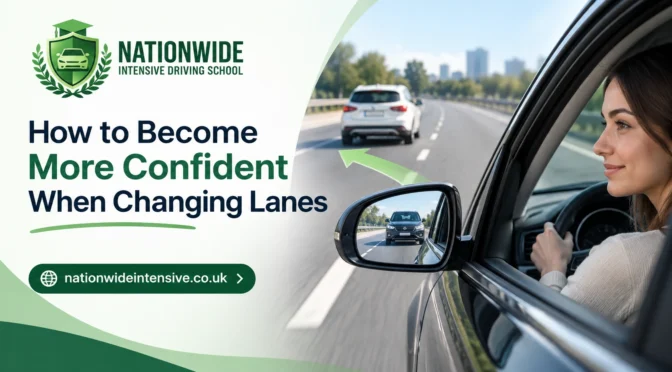
To become more confident when changing lanes, build a consistent routine: check your mirrors, assess the blind spot, signal when appropriate, choose a safe gap and move across smoothly. Don’t rush because another driver is behind you. Confidence comes from practising lane changes in different traffic conditions until your observations and decisions become automatic.
Changing lanes can feel surprisingly stressful when you’re learning to drive.
You’re cruising along and suddenly realise you need to move over.
You check one mirror.
Then the other.
“Is there a car there?”
“Is that vehicle getting closer?”
“Should I signal now?”
“What if I move over and they’re already there?”
Before you know it, you’ve missed your opportunity and decide to stay in the lane.
If this sounds familiar, you’re certainly not alone.
As an experienced driving instructor, I’ve seen many learners become nervous about lane changes. Usually, the problem isn’t that they can’t physically move the car into another lane. It’s that they’re trying to process too much information at once.
The solution is to develop a simple, repeatable routine.
Why Do Learners Find Lane Changes Difficult?
Changing lanes requires you to consider several things simultaneously:
- Your current speed
- The traffic ahead
- Vehicles behind
- Your mirrors
- Your blind spot
- The gap in the next lane
- Your signal
- Your road position
That’s a lot to think about when you’re still developing your driving skills.
With experience, these checks become much more natural.
During Driving Lessons Kenley, your instructor can help you break the process down until you no longer have to consciously think about every individual step.
1. Look Ahead Before You Need to Change Lanes
One of the biggest mistakes learners make is waiting until the last possible moment.
Suppose you’re approaching a junction or roundabout where you know you’ll need to move into another lane.
Don’t wait until you’re almost there.
Look at the road signs and markings early.
Ask yourself:
“Which lane will I need?”
Once you know, you have more time to find a suitable opportunity.
Good lane changing starts with forward planning.
2. Use a Consistent Mirror Routine
You don’t need to stare at your mirrors for ages.
You need to know what information they give you.
Before changing lanes, check the relevant mirrors so you understand:
- What’s directly behind you.
- What’s approaching in the next lane.
- How quickly another vehicle is travelling.
Your instructor may teach you a specific mirror routine depending on the situation.
The important thing is consistency.
3. Check the Blind Spot
Mirrors don’t show you everything.
A vehicle, cyclist or motorcycle can be positioned where you can’t see it properly in your mirrors.
That’s why a final blind-spot check can be important before moving across.
Don’t turn your head for so long that you lose awareness of what’s happening ahead.
A quick, controlled check is usually enough to confirm whether the space beside you is clear.
4. Don’t Treat the Signal as Permission to Move
This is a really important distinction.
Your signal tells other road users what you intend to do.
It doesn’t automatically give you priority.
Think:
Mirrors → Blind spot → Signal → Safe gap → Move
The exact order can vary depending on the situation, so follow your instructor’s guidance.
The key point is that you should never assume it’s safe simply because you’ve indicated.
5. Judge the Speed of Other Vehicles
A common learner mistake is looking at a vehicle in the next lane and thinking:
“There’s plenty of space.”
But how quickly is that vehicle approaching?
A vehicle that’s several car lengths away but travelling significantly faster may reach you very quickly.
Don’t judge a gap by distance alone.
Consider:
Distance + speed + available time.
With more experience, you’ll become much better at recognising whether a gap is suitable.
6. Don’t Wait for a Perfect Gap
Some nervous learners wait for the next lane to become completely empty.
In normal traffic, that’s unrealistic.
You’re looking for a safe and suitable gap, not an empty road.
If the opportunity isn’t suitable, wait.
If a safe opportunity appears, make a confident decision rather than repeatedly checking until the gap disappears.
Your instructor can help you practise this judgement during your Driving Lessons Kenley.
7. Move Smoothly Once You’ve Decided
One of the worst things you can do after deciding to change lanes is suddenly changing your mind halfway through.
If you’ve completed your observations, identified a safe gap and decided to move, make the manoeuvre smoothly and progressively.
Avoid:
- Sudden steering
- Harsh acceleration
- Abrupt braking
- Drifting between lanes
Your lane change should be controlled and predictable.
8. Don’t Let Other Drivers Rush You
This is especially important for nervous learners.
You might indicate and notice a car behind you.
Suddenly, you feel pressured.
Don’t rush.
Another driver’s speed doesn’t change whether the gap is safe.
If you need to wait, wait.
If someone is driving aggressively behind you, stay focused on your own observations and don’t make a dangerous lane change simply to get out of their way.
9. Practise on Different Roads
Lane changes can feel very different depending on where you’re driving.
Practise with your instructor on:
- Multi-lane urban roads
- Dual carriageways
- Busy junctions
- Roundabouts
- Roads with lane markings
- Roads where lanes merge
- Heavier traffic
The more situations you experience, the easier it becomes to recognise what you need to do.
10. Learn to Plan Lane Changes Early
Good drivers aren’t constantly making last-second decisions.
They’re looking ahead.
If you see a sign telling you that your lane will turn into a right-turn lane, start planning.
If you’re approaching a roundabout, check the road signs and lane markings.
If your lane is ending, don’t wait until the final few metres.
Early planning gives you more options.
This is one of the most valuable habits you can develop before your practical driving test.
Can an Intensive Driving Course Improve Lane-Change Confidence?
It can be particularly useful if you understand the basics but lack real-world confidence.
An Intensive Driving Course Kenley gives you more concentrated time behind the wheel, allowing you to practise lane changes repeatedly in different traffic situations.
You can work on:
- Mirror checks
- Blind-spot awareness
- Signalling
- Lane positioning
- Gap judgement
- Dual carriageway driving
- Roundabouts
- Independent driving
- Forward planning
Because the practice is more concentrated, you can often identify patterns in your driving and work on them consistently.
What If You’re Still Nervous About Changing Lanes?
Don’t try to eliminate the nerves overnight.
Instead, focus on making your process reliable.
Ask yourself:
Have I checked the mirrors?
Have I assessed the gap?
Have I checked the blind spot where appropriate?
Is the move safe?
Can I move smoothly?
If the answer is yes, trust your decision.
Confidence isn’t about never feeling nervous.
It’s about knowing what to do when you feel nervous.
Does Learning in an Automatic Car Make Lane Changes Easier?
For some learners, it can.
With an automatic car, you don’t need to coordinate clutch control and manual gear changes while changing lanes.
That can leave more attention available for:
- Mirrors
- Traffic
- Road signs
- Blind spots
- Lane positioning
- Gap judgement
However, manual driving lessons can also provide excellent preparation if you want to learn full clutch and gear control.
The best option depends on your circumstances and what type of vehicle you plan to drive after passing your test. Nationwide Intensive LTD. is here to help you with that.
Frequently Asked Questions
How can I become more confident changing lanes?
Practise a consistent routine involving mirrors, blind-spot awareness, signalling, gap judgement and smooth steering. Regular practice in different traffic conditions will gradually build confidence.
Should I signal before checking my mirrors?
Your exact routine depends on the situation, but you should establish your observations and intentions appropriately before moving. A signal does not mean you automatically have priority.
What if I’m too nervous to change lanes?
Don’t force yourself into an unsafe gap. Ask your instructor to practise lane changes gradually, starting on quieter roads and progressing to busier routes.
How do I know if there’s enough space to change lanes?
Consider both the distance and speed of vehicles in the target lane. You need enough time and space to move across without causing another road user to alter speed or direction unnecessarily.
Can I change lanes without signalling?
Signals should be used when they would benefit or warn other road users. Your instructor can explain when signalling is appropriate for the particular road situation.
Can intensive driving lessons improve lane-changing skills?
Yes. Concentrated driving practice can give you more opportunities to work on mirror use, blind-spot checks, gap judgement and lane positioning.
