

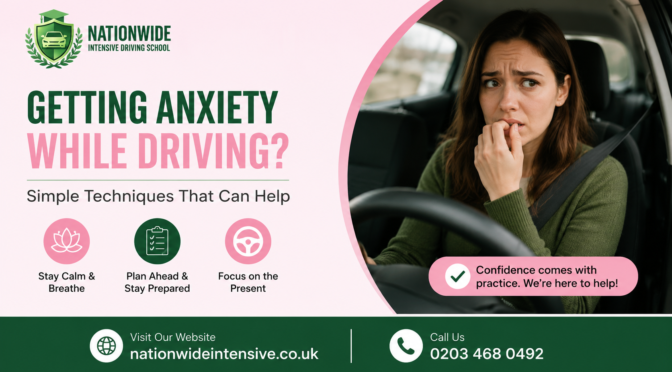
If you’re feeling anxious about learning to drive, you’re far from alone. As a driving instructor who’s worked with nervous learners for years, I can confidently say that anxiety is one of the most common challenges new drivers face. The good news is that it doesn’t have to stop you from passing your practical driving test. With the right instructor, consistent practice, and a few simple techniques, you can gradually replace fear with confidence and enjoy driving.
If there’s one thing I’ve learned from teaching learner drivers over the years, it’s this:
The people who worry the most about making mistakes often become some of the safest drivers.
I’ve had learners who were so nervous before their first lesson that they couldn’t sleep the night before. Others apologised every time they stalled the car or hesitated at a roundabout.
A few months later, those same learners were confidently driving through busy roads, completing independent driving routes, and passing their practical driving test.
That’s why I always remind nervous learners that feeling anxious doesn’t mean you’re a bad driver, it simply means you’re learning something new.
Let’s look at why driving anxiety happens and the simple techniques that can help you overcome it.
Why Does Learning to Drive Feel So Overwhelming?
Learning to drive isn’t just about steering a car.
At the same time, you’re expected to:
- Watch other road users.
- Read road signs.
- Judge speed and distance.
- Follow the Mirror-Signal-Manoeuvre (MSM) routine.
- Make safe decisions at junctions.
- Control the clutch and gears (if learning in a manual car).
- Stay calm under pressure.
It’s completely normal for your brain to feel overloaded during the early lessons.
The important thing to remember is that confidence grows with experience, not overnight.
1. Accept That Anxiety Is Part of the Learning Process
One of the biggest misconceptions I hear is:
“I shouldn’t still be nervous after ten lessons.”
In reality, every learner develops at a different pace.
Some people feel confident after a few lessons.
Others take longer to trust themselves behind the wheel.
Neither is right or wrong.
As an instructor, I’ve found that learners improve much faster once they stop expecting perfection and start focusing on steady progress instead.
2. Be Honest With Your Driving Instructor
You don’t need to hide your nerves.
In fact, telling your instructor how you’re feeling allows them to adapt the lesson to suit your confidence.
For example, they might begin with:
- Quiet residential roads.
- Simple junctions.
- Lower-speed areas.
- Easier parking exercises.
As your confidence improves, they’ll gradually introduce more challenging situations.
During Driving Lessons Selhurst, learning with an instructor who understands nervous drivers can make a huge difference to how quickly your confidence grows.
3. Focus on One Driving Skill at a Time
Many anxious learners try to think about everything at once.
Instead, simplify the lesson.
Concentrate on improving one specific skill, such as:
- Clutch control.
- Mirror checks.
- Roundabouts.
- Bay parking.
- Parallel parking.
- Road positioning.
Breaking driving into smaller, manageable steps makes learning feel much less overwhelming.
Those small wins soon turn into bigger improvements.
4. Stop Comparing Yourself to Other Learners
This is something I talk about in almost every lesson.
One learner might pass after 30 hours.
Another might need 50.
Both receive exactly the same UK driving licence.
You never know someone else’s experience, confidence level or amount of private practice.
The only comparison that matters is whether you’re driving better today than you were last week.
That’s real progress.
5. Replace Negative Thoughts With Realistic Ones
Your mindset has a huge impact on your driving.
Instead of thinking:
“I’m definitely going to stall.”
Try saying:
“If I stall, I’ll restart the car safely because I know what to do.”
Notice the difference?
You’re not pretending mistakes won’t happen, you’re reminding yourself that you know how to deal with them.
That’s exactly how confident drivers think.
6. Build Confidence Through Consistent Practice
Confidence doesn’t suddenly appear one morning.
It’s built every time you successfully:
- Move off smoothly.
- Complete a roundabout.
- Park correctly.
- Drive through busy traffic.
- Handle a new road safely.
Eventually, these actions become automatic.
Instead of thinking about every movement, you’ll naturally focus on reading the road ahead and anticipating hazards.
That’s when driving starts to feel enjoyable rather than stressful.
7. Would an Intensive Driving Course Help?
Some learners lose confidence because they leave too much time between lessons.
By the next session, they’re trying to remember what they learned the previous week.
An Intensive Driving Course Selhurst helps many learners overcome this by providing consistent daily practice.
Driving over consecutive days allows you to reinforce new skills immediately, helping build confidence and muscle memory much faster.
For learners preparing for their practical driving test, this can be an excellent way to stay focused and make steady progress.
8. Choose the Right Type of Driving Lessons
Another factor that can affect confidence is the type of car you’re learning in.
If clutch control and gear changes are increasing your anxiety, it’s worth discussing automatic driving lessons with your instructor.
Automatic cars remove the need to manage gears, allowing many learners to focus more on observations, hazard perception and road awareness.
If you prefer the flexibility that comes with a manual licence, manual driving lessons remain a great choice, it simply comes down to your personal goals and confidence.
Simple Techniques to Stay Calm Before Every Lesson
If you often feel nervous before driving, try these practical tips:
- Arrive early so you’re not rushing.
- Take slow, deep breaths before starting the engine.
- Focus on today’s lesson instead of worrying about the driving test.
- Accept that making mistakes is part of learning.
- Celebrate one improvement after every lesson.
- Trust your instructor’s guidance.
- Remember that every experienced driver was once a beginner.
Progress happens one lesson at a time.
Frequently Asked Questions
Is it normal to feel anxious during driving lessons?
Yes. Driving anxiety is extremely common, especially during the early stages of learning. Most learners become more confident with regular practice and experience.
Can anxiety affect my practical driving test?
Yes. Nervousness can sometimes affect concentration and decision-making. However, mock driving tests, consistent lessons and good preparation usually help reduce test-day anxiety.
Should I tell my driving instructor that I’m nervous?
Absolutely. A professional instructor can adjust your lessons, introduce challenges gradually and help you build confidence at a pace that suits you.
Can an intensive driving course help nervous learners?
Yes. Many learners find that daily driving during an intensive course helps them build confidence more quickly because they practise consistently instead of waiting a week between lessons.
Should I choose automatic or manual lessons if I’m anxious?
If clutch control and gear changes are causing most of your stress, automatic lessons may be a good option. If you’re comfortable learning in a manual car and want greater flexibility after passing, manual lessons are still an excellent choice.
Final Thoughts
Learning to drive with anxiety can feel challenging, but it doesn’t have to hold you back.
After teaching nervous learners for many years, I’ve seen first-hand that confidence isn’t something people either have or don’t have, it’s something they build through patience, practice and the right support. Every lesson is another opportunity to improve your skills, trust your judgement and become a safer driver.
If you’re looking for supportive Driving Lessons Selhurst, working with experienced instructors at Nationwide Intensive LTD. who understand nervous learners can make your learning experience far more enjoyable. And if you’d like to gain confidence through regular, focused practice, an Intensive Driving Course Selhurst could help you build momentum and prepare for your practical driving test sooner.
Whether you’re considering regular lessons, an intensive course, or deciding between automatic driving lessons and manual driving lessons, remember that every confident driver on UK roads started exactly where you are today. Keep practising, trust the process, and you’ll be amazed at how far your confidence can grow.
