

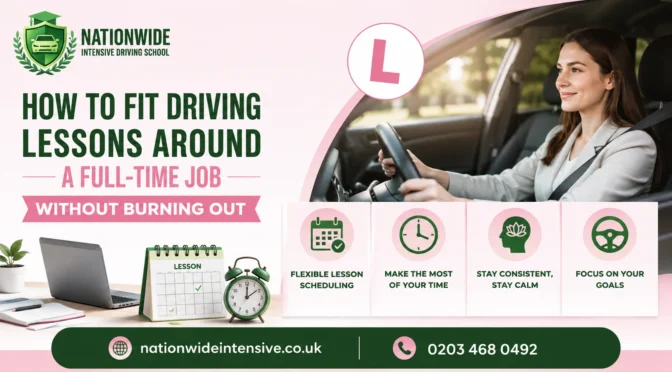
Balancing a full-time job with driving lessons can feel challenging, but it’s absolutely possible with the right approach. As a driving instructor who’s worked with busy professionals across London, I’ve found that the most successful learners don’t try to fit driving into every spare moment, they create a realistic routine that works around their job. By planning lessons wisely, avoiding burnout, and focusing on quality practice instead of quantity, you can make steady progress towards your practical driving test.
One conversation I’ve had countless times with learners goes something like this:
“I’d love to learn to drive, but I work Monday to Friday and I’m exhausted by the end of the day.”
If that sounds familiar, you’re not alone.
Many of my learners work full-time. Some commute long hours, others work shifts, and plenty are juggling family responsibilities as well. Despite their busy schedules, they still manage to pass their practical driving tests.
The difference isn’t that they have more free time.
It’s that they learn to make driving lessons fit their lifestyle instead of trying to force them into an already packed schedule.
Here’s what I’ve found works best.
Can You Learn to Drive While Working Full-Time?
Absolutely.
In fact, many learner drivers in the UK complete their driving lessons while working a full-time job.
The key is understanding that learning to drive is a marathon, not a sprint.
Trying to squeeze too many lessons into an already stressful week often leads to frustration, fatigue and slower progress.
A realistic learning plan is far more effective than an overloaded one.
1. Choose Lesson Times That Match Your Energy Levels
One mistake I often see is learners booking lessons at times when they’re already mentally exhausted.
For example, if you’ve just finished a demanding nine-hour shift, your concentration may not be at its best.
Ask yourself:
- Am I more alert before work?
- Would Saturday mornings suit me better?
- Do I prefer Sunday afternoons?
- Would one evening each week feel manageable?
There’s no perfect schedule, only the one that works for you.
During Driving Lessons Kenley, choosing lesson times when you’re mentally fresh often leads to quicker progress and a more enjoyable learning experience.
2. Quality Matters More Than Quantity
Many learners think taking multiple lessons every week is the fastest route to passing.
Not always.
In my experience, one focused lesson where you’re fully engaged is often more valuable than several lessons taken when you’re tired and distracted.
Driving requires concentration, good judgement and quick decision-making.
When you’re mentally drained, learning becomes much harder.
3. Plan Your Lessons in Advance
Busy work schedules can change quickly.
That’s why I always recommend booking several lessons in advance rather than arranging them week by week.
Having regular sessions in your calendar helps you:
- Stay consistent.
- Avoid long gaps between lessons.
- Keep building confidence.
- Maintain steady progress.
Consistency is one of the biggest factors in becoming test-ready.
4. Practise Little and Often
If you have access to a supervising driver, you don’t need to spend hours practising.
Even a short drive can help reinforce what you’ve learned.
For example, you could spend 20–30 minutes working on:
- Moving off smoothly.
- Mirror checks.
- Roundabouts.
- Parking manoeuvres.
- Junction observations.
- Speed awareness.
Small amounts of regular practice often make a bigger difference than occasional long sessions.
5. Don’t Rush to Book Your Driving Test
It’s understandable to want your full UK driving licence as quickly as possible.
But rushing because of work deadlines can increase stress.
Instead, focus on becoming a confident driver first.
Your instructor should tell you when you’re consistently ready for your practical driving test.
Passing first time is usually less stressful than taking multiple tests before you’re fully prepared.
6. Consider an Intensive Driving Course If Time Is Limited
Some busy professionals struggle to commit to weekly lessons for several months.
If that’s the case, an Intensive Driving Course Kenley could be a practical alternative.
Instead of spreading lessons across many weeks, you’ll complete your training over consecutive days.
Many learners choose this option because it:
- Fits around annual leave.
- Reduces the overall learning timeline.
- Keeps driving skills fresh.
- Builds confidence through consistent practice.
If your work schedule makes weekly lessons difficult, intensive learning may be worth discussing with your instructor.
7. Decide Whether Automatic or Manual Is Right for You
Another way to simplify learning is choosing the type of car that best suits your needs.
If you’re mainly learning so you can commute or travel more easily, automatic driving lessons may help you feel confident more quickly by removing clutch control and gear changes.
If you want the flexibility to drive both manual and automatic vehicles in the future, manual driving lessons remain a great option.
Think about your long-term driving goals rather than what other people choose.
8. Make Time to Rest
This is probably the advice learners least expect from me.
Rest matters.
Learning while you’re exhausted isn’t productive.
If you’ve had a particularly stressful week at work, it’s perfectly reasonable to discuss adjusting your lesson rather than pushing through while mentally drained.
Driving safely always comes before sticking rigidly to a schedule.
Simple Tips for Balancing Work and Driving Lessons
If you’re learning while working full-time, these habits can help:
- Book lessons at times when you feel most alert.
- Keep a consistent weekly schedule.
- Practise little and often if possible.
- Avoid comparing your progress with others.
- Don’t rush your driving test.
- Take breaks when work becomes particularly demanding.
- Focus on becoming a safe driver rather than passing as quickly as possible.
Steady progress is always better than burnout.
Frequently Asked Questions
Can I learn to drive while working full-time?
Yes. Many UK learners successfully complete their driving lessons while working full-time. Planning lessons around your schedule and staying consistent are the keys to success.
Is one driving lesson a week enough?
For many learners, yes. Regular weekly lessons combined with private practice can provide steady progress towards your practical driving test.
Would an intensive driving course suit busy professionals?
Often, yes. Intensive courses allow learners to complete their training over consecutive days, making them a popular option for people with limited long-term availability.
Should I choose automatic or manual driving lessons?
If convenience and confidence are your priorities, automatic lessons may suit you well. If you want greater flexibility after passing your test, manual lessons remain an excellent choice.
What’s the best time to book driving lessons?
The best time is when you’re mentally alert and able to concentrate. Many learners prefer weekends, mornings or evenings that don’t immediately follow a demanding workday.
Final Thoughts
Learning to drive while working full-time isn’t always easy, but it’s far from impossible.
After teaching many busy professionals over the years, I’ve found that success doesn’t come from filling every spare hour with driving lessons. It comes from creating a routine that’s realistic, sustainable and built around your lifestyle. When you balance work, rest and consistent practice, you’ll make progress without feeling overwhelmed.
If you’re looking for flexible Driving Lessons Kenley, working with experienced instructors at Nationwide Intensive LTD. who understand the demands of full-time employment can make learning much more manageable. And if your schedule makes weekly lessons difficult, an Intensive Driving Course Kenley could help you build confidence and prepare for your practical driving test in a shorter, more focused timeframe.
Whether you’re choosing regular lessons, an intensive course, or deciding between automatic driving lessons and manual driving lessons, remember that learning to drive isn’t about rushing the process. It’s about building the skills and confidence you’ll rely on every time you get behind the wheel.
