

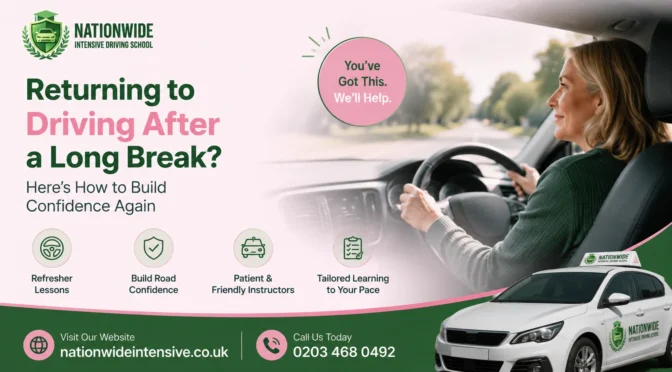
If you haven’t driven for months or years, feeling nervous when you get back behind the wheel is completely normal. You don’t necessarily need to start learning from scratch, but you may need to refresh your vehicle control, road awareness and confidence. As an experienced driving instructor, I usually recommend starting with familiar, quieter roads, taking a few refresher lessons and gradually increasing the difficulty. The key is to rebuild confidence through regular, safe practice rather than trying to do everything on your first drive.
“I passed my test years ago, but I haven’t driven since. I’m honestly scared to start again.”
I’ve heard this from many drivers.
Some passed their test but never bought a car. Others stopped driving after moving to London, changing jobs, having children or simply not needing a car for a while.
Then something changes.
Perhaps you’ve got a new job that requires driving. Maybe you’ve moved somewhere where public transport isn’t as convenient. Or perhaps you simply want the freedom of getting behind the wheel again.
Whatever the reason, there’s one thing I’d say straight away:
You probably haven’t forgotten everything. You just need to get comfortable driving again.
Is It Normal to Feel Nervous After a Long Driving Break?
Absolutely.
Even experienced drivers can feel rusty after spending a long time away from the road.
You may suddenly find yourself thinking about things that used to feel automatic:
- When should I change gear?
- How close should I be to the kerb?
- Am I checking my mirrors enough?
- What speed should I use here?
- Can I handle this roundabout?
That’s normal.
Driving relies heavily on experience and repetition. After a long break, your confidence can disappear faster than your underlying skills.
The good news is that familiarity usually comes back with practice.
1. Don’t Immediately Drive on the Busiest Roads
One of the biggest mistakes returning drivers make is trying to prove they can still drive.
They get back into the car and immediately tackle busy roads, complicated junctions or unfamiliar routes.
There’s no need.
Start somewhere manageable.
A quiet residential area can give you the opportunity to refresh:
- Steering
- Braking
- Moving off
- Gear changes
- Mirror checks
- Road positioning
- Speed control
Once these feel comfortable again, gradually introduce more demanding roads.
2. Take a Refresher Driving Lesson
Even if you’ve held a full UK driving licence for years, refresher lessons can be extremely useful.
An experienced instructor can give you an objective assessment without the pressure you might feel when driving with a family member.
During Driving Lessons Morden, you can work specifically on the areas you’re least confident about rather than spending time relearning everything.
For example, you may discover that your basic car control is still good but you need more practice with:
- Busy roundabouts
- Dual carriageways
- Parking
- Lane discipline
- Motorway preparation
- Hazard awareness
A few focused lessons can make a big difference.
3. Don’t Compare Yourself With How You Used to Drive
This is an easy trap to fall into.
You remember being confident five years ago, so you expect yourself to feel exactly the same today.
But your first few drives after a long break may feel awkward.
That’s okay.
Your brain needs time to rebuild familiarity.
Instead of thinking:
“I used to be much better.”
think:
“I’m getting comfortable again.”
That small change in mindset can remove a lot of unnecessary pressure.
4. Practise the Same Routes Repeatedly
If you’re nervous, repetition is your friend.
Choose a few familiar routes and drive them several times.
For example:
First drive: Quiet local roads.
Second drive: Local shops or workplace route.
Third drive: Busier roads.
Fourth drive: More complicated junctions.
Fifth drive: Unfamiliar destination.
Each successful journey gives you more confidence.
Eventually, you’ll stop concentrating on every individual control and start thinking more naturally about the road around you.
5. Get Comfortable With Modern Road Conditions
If you’ve been away from driving for a long time, some things may feel different.
Traffic levels may have changed.
Road layouts may have been modified.
You may encounter more cyclists, bus lanes, speed cameras or different junction arrangements than you remember.
Don’t assume that because you passed your test years ago, you already know everything.
Take some time to refresh your knowledge of the Highway Code, road signs and current road rules.
6. Don’t Let One Difficult Drive Destroy Your Motivation
Your first few drives might not go perfectly.
You could stall.
You might take a wrong turn.
Perhaps a busy roundabout feels intimidating.
Don’t let one difficult moment convince you that you can’t drive anymore.
Ask yourself:
“What can I learn from that situation?”
If you struggled with a particular junction, practise it again.
If you were nervous on a busy road, build up gradually.
Progress comes from solving individual problems rather than expecting yourself to suddenly feel confident everywhere.
7. Consider an Intensive Driving Course
If you’ve been away from driving for a long time and need to rebuild your confidence quickly, an Intensive Driving Course Morden may be worth considering.
Intensive training allows you to practise over consecutive days rather than having long gaps between sessions.
This can be useful when you need to refresh several areas, such as:
- Vehicle control
- Roundabouts
- Junctions
- Parking
- Road positioning
- Independent driving
- Hazard awareness
Frequent practice can help you regain familiarity while everything is still fresh.
An intensive course isn’t necessary for everyone, but it can be a practical option if you want focused support.
8. Decide Whether Manual or Automatic Suits You Now
If you originally learned in a manual car but haven’t driven for years, you might find the clutch and gears less comfortable than you remember.
That’s worth considering.
Automatic driving lessons can remove the need to manage clutch control and manual gear changes, allowing you to focus more on traffic, hazards and road positioning.
Alternatively, manual driving lessons can help you rebuild confidence with gears and clutch control if you want to continue driving a manual vehicle.
There’s no requirement to stick with the same type of car simply because that’s what you originally learned in.
9. Build Confidence Gradually
You don’t need to drive every day.
But consistency helps.
If possible, create a realistic routine where you’re driving regularly rather than leaving several weeks between attempts.
Each session should have a purpose.
For example:
Week 1: Vehicle control and quiet roads.
Week 2: Junctions and local traffic.
Week 3: Roundabouts and busier roads.
Week 4: Longer and less familiar journeys.
The exact timeline doesn’t matter.
What matters is gradual progression.
Simple Ways to Stay Motivated
If you’re struggling to get back into driving, try these:
- Set small driving goals.
- Keep a record of what you’ve improved.
- Start with routes you know.
- Don’t rush into difficult traffic.
- Take refresher lessons if you’re unsure.
- Practice consistently.
- Don’t compare your current driving with your past driving.
- Celebrate small improvements.
Remember, confidence usually follows experience.
You don’t have to feel confident before you start practising.
Frequently Asked Questions
Can I drive again after years without driving?
Yes. Many full licence holders return to driving after long breaks. However, it’s sensible to refresh your skills gradually and consider refresher lessons if you’re nervous or unsure.
Do I need to retake my driving test after a long break?
Generally, simply not driving for a period doesn’t mean you have to retake your test. However, you remain responsible for ensuring you’re competent, safe and legally fit to drive. If you’re unsure about your current ability, refresher training can help.
How can I regain confidence after not driving for years?
Start with familiar, quieter roads, practise regularly and gradually increase the difficulty. A refresher lesson with a professional instructor can also help identify areas that need attention.
Are refresher driving lessons worth it?
They can be very useful. An instructor can assess your current driving objectively and focus lessons on specific areas such as roundabouts, parking, road positioning and busy traffic.
Can an intensive driving course help after a long break?
Yes. An intensive course can provide concentrated practice over consecutive days, which may help you rebuild confidence and refresh several driving skills efficiently.
Should I switch from manual to automatic after a long break?
It depends on your needs. Automatic cars can simplify vehicle control, while manual driving gives you experience with clutch and gear changes. Consider which option best suits your current confidence and future driving plans.
Final Thoughts
Returning to driving after a long break can feel intimidating, but you shouldn’t assume you’ve lost everything you learned.
From my experience as a driving instructor, most returning drivers need reassurance, practice and familiarity, rather than starting completely from zero. Begin with easier roads, refresh the skills that feel rusty and gradually challenge yourself with more complicated situations.
If you’re looking for professional Driving Lessons Morden, refresher training at Nationwide Intensive LTD. can give you an experienced second pair of eyes and help identify exactly where your confidence needs rebuilding. And if you want a more concentrated approach, an Intensive Driving Course Morden can provide regular practice over consecutive days.
You can also consider whether automatic driving lessons or manual driving lessons are more suitable for your current needs.
Most importantly, don’t expect yourself to drive exactly as you did years ago on your first attempt. Give yourself time to settle back in. Confidence comes from experience, and every safe journey you complete is another step towards feeling comfortable behind the wheel again.
