
Tag Archives: Best Driving School

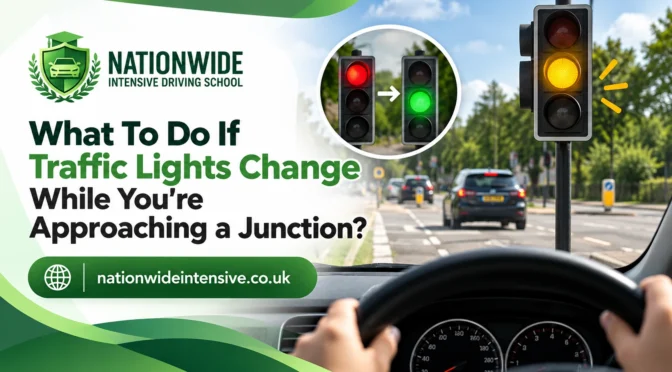
What To Do If Traffic Lights Change While You’re Approaching a Junction?

If traffic lights change while you are approaching a junction in the UK, check the signal and your surroundings, then decide whether you can stop safely. You must stop at a red light and should stop at an amber light unless you have already crossed the stop line or are so close that stopping could cause a collision. Never accelerate to beat the lights. Stay calm, make a safe decision and follow the Highway Code.

Why Do Changing Traffic Lights Make Learner Drivers Nervous?

Approaching a junction requires you to manage several things at once: your speed, road position, mirrors, traffic and the signal ahead. When the lights suddenly change from green to amber, it can feel as though you have only a second to make the right decision.

From a driving instructor’s perspective, the biggest challenge is often hesitation. Some learners brake too sharply because they panic, while others accelerate because they are worried about being caught at a red light.

The key is to plan ahead. Look at the traffic lights early, keep a suitable speed and avoid driving so close to the vehicle in front that you cannot stop comfortably.

If you are taking Driving Lessons Little Woodcote, ask your instructor to practise different traffic-light situations with you. Learning how to respond calmly can improve your confidence at junctions and help you prepare for your practical driving test.

What Should You Do When the Traffic Lights Change?

1. If the Lights Change from Green to Amber

An amber light means you must stop at the stop line unless you have already crossed it or stopping could cause a collision.

For example, if you are approaching the junction at a sensible speed and have enough distance to brake smoothly, prepare to stop. If you are extremely close to the stop line and braking hard could be dangerous, continuing through may be the safer option.

Do not treat amber as an invitation to accelerate. Your decision should be based on the distance remaining, your speed and the traffic around you.

2. If the Lights Turn Red

A red light means you must stop behind the stop line. If the lights turn red before you reach the line, do not continue through the junction.

Avoid rushing to clear the junction because you think you are running out of time. This can put pedestrians, cyclists and other drivers at risk.

If you have already crossed the stop line when the signal changes, continue clearing the junction safely rather than stopping in the middle of moving traffic, provided the road ahead is clear.

3. If the Lights Stay Green

A green light means you may proceed only if the way is clear and it is safe to do so. It does not mean you should drive straight into a blocked junction.

Check for pedestrians crossing, cyclists approaching and vehicles that may still be clearing the junction. If traffic ahead is stationary and you cannot exit the junction, wait until there is enough space.

Remember: Green means proceed when safe, not proceed without checking.

How Can You Avoid Braking Too Suddenly?

Sudden braking can create a risk for vehicles travelling behind you. Although you must stop when required, planning your approach makes it easier to brake smoothly. Reach out to Nationwide Intensive LTD. for more .

Use these simple techniques:

  • Look well ahead: Check traffic signals from a distance instead of waiting until you reach the junction.
  • Maintain a safe following distance: Leave enough room to slow down without reacting sharply to the car ahead.
  • Control your speed: Approach junctions at a speed that allows you to respond to changing signals.
  • Avoid distractions: Keep your attention on the road rather than looking at your phone or adjusting controls.
  • Stay calm: If you make a mistake, focus on driving safely rather than worrying about what the examiner might think.

These habits help you develop better hazard perception and more consistent driving decisions.

Can Getting Traffic Lights Wrong Cause You to Fail Your Driving Test?

Yes, depending on the circumstances. Ignoring a red light or making a decision at an amber light that creates danger can result in a serious or dangerous fault. A mistake that puts other road users at risk may lead to an immediate test failure.

However, you are not expected to predict exactly when every traffic light will change. The examiner wants to see that you observe the signals, judge stopping distances sensibly and respond safely.

If you are preparing for your driving test, an Intensive Driving Course Little Woodcote can provide focused practice in junction approach, traffic-light awareness, stopping distances and hazard perception.

You can explore our intensive driving courses in London to learn more. You can also compare our manual driving lessons in London and automatic driving lessons in London to find the right learning option for you.

Frequently Asked Questions

Should I stop if the traffic light turns amber?

Yes, unless you have already crossed the stop line or are so close that stopping could cause a collision. Do not speed up to beat the light.

Can I cross the junction if the light turns red after I pass the stop line?

If you have already crossed the stop line, continue through the junction safely when it is clear. Do not stop in a dangerous position simply because the signal has changed.

Will I fail my driving test if I brake suddenly at a traffic light?

Not necessarily. The examiner considers the circumstances. However, unnecessary harsh braking or a failure to judge the situation safely may result in a fault.

What should I do if traffic blocks the junction even though the light is green?

Wait behind the stop line until there is enough room to clear the junction. Do not enter if you would become stuck and obstruct crossing traffic.
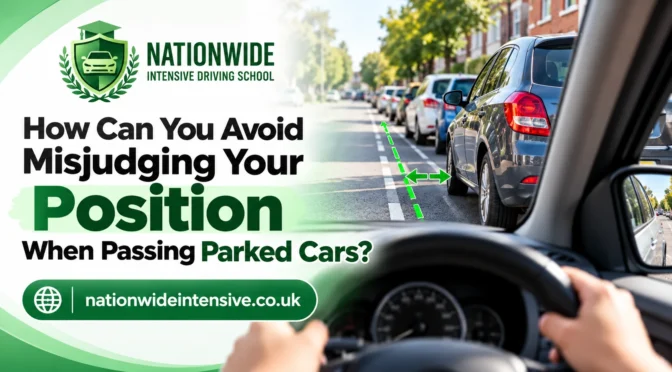
How Can You Avoid Misjudging Your Position When Passing Parked Cars?

To avoid misjudging your position when passing parked cars, look well ahead, judge the available space early, check your mirrors and blind spots, and maintain a safe clearance from the parked vehicle. If an oncoming vehicle makes the gap too narrow, slow down and be prepared to wait. Never squeeze through a space if it puts you or another road user at risk.

Why Do Learner Drivers Misjudge Their Position Near Parked Cars?

Passing parked cars can be surprisingly tricky when you are learning to drive. You need to judge the width of your car, the distance from the parked vehicle and whether there is enough room for oncoming traffic.

From a driving instructor’s perspective, one common problem is that learners focus too much on the parked car directly beside them. This leaves less time to assess the road ahead and spot approaching vehicles, cyclists or pedestrians.

Another challenge is judging the left-hand side of the car. If you are unsure how close you are to the parked vehicle, you might move too far towards the centre of the road or leave an unnecessarily large gap.

If you are taking Driving Lessons Riddlesdown, ask your instructor to help you practise passing parked vehicles on quieter roads before tackling busier streets. Building this skill gradually can make your positioning much more consistent.

6 Tips for Passing Parked Cars Safely

1. Look Ahead and Plan Early

Do not wait until you are right beside a parked car to decide what to do. Look further down the road to identify parked vehicles, oncoming traffic, bends and potential hazards.

If you can see a clear section of road ahead, you can plan your approach and decide whether you have enough space to pass safely.

Practical tip: Try to identify several parked cars ahead rather than focusing only on the nearest one. This helps you anticipate where you might need to wait or adjust your position.

2. Judge the Available Space Carefully

Before moving around a parked car, consider its width, your vehicle’s width and the space available on the other side. Remember that a parked van or large vehicle may require more room than a small car.

You should leave adequate clearance rather than trying to pass as closely as possible. If the road is too narrow for you to pass safely alongside an approaching vehicle, wait in a suitable position until there is enough space.

Never assume that another driver will slow down or move over to accommodate you. Reach out to Nationwide Intensive LTD. for more such information.

3. Check Your Mirrors Before Moving Out

Passing a parked car often means moving slightly towards the centre of the road. Before changing your position, check your mirrors for vehicles, cyclists and motorcyclists approaching from behind.

Signal if it would help other road users understand your intention, and check your blind spot where appropriate before moving laterally.

Practical tip: Make your observations early. Last-second mirror checks can leave you with too little time to react safely.

4. Use Reference Points Without Relying on Them Completely

Some learners use parts of the dashboard or windscreen as reference points to estimate the car’s position. These can be helpful during lessons, but they are not exact measurements.

Your view changes depending on the vehicle you drive, your seating position and the shape of the parked car.

Instead, practise judging space through repeated experience. Ask your instructor to explain where the car is positioned and how much clearance you have, then gradually learn to assess it independently.

5. Watch for Doors, Pedestrians and Cyclists

A parked car is not always an inactive hazard. Someone might open a door, step out from between vehicles or walk around the back of a van.

Look for brake lights, occupants inside vehicles and signs that someone may be about to move. Leave extra room where possible and reduce your speed if visibility is restricted.

Be particularly careful around cyclists travelling past parked cars, as they may need space to avoid opening doors. Do not squeeze between a cyclist and a parked vehicle.

6. Know When to Wait

You do not have to pass every parked car immediately. If an oncoming vehicle is approaching and the gap is too narrow, slow down and wait where it is safe and appropriate.

Look for a suitable space that allows the other vehicle to pass without forcing either driver into a dangerous position. Avoid stopping where you obstruct a junction, crossing or other road users unnecessarily.

Waiting for a safe opportunity demonstrates good judgement, not poor driving.

Can Poor Positioning Cause You to Fail Your Driving Test?

Yes, depending on the circumstances. The examiner assesses whether you can maintain safe road positioning, observe other road users and make sensible decisions.

A minor positioning error may result in a driving fault. However, moving too close to parked cars, forcing an oncoming driver to take evasive action or failing to respond to a hazard could lead to a serious or dangerous fault.

The aim is not to pass every parked car perfectly. It is to show that you can recognise risks, maintain control and choose a safe course of action.

If you need more practice before your test, an Intensive Driving Course Riddlesdown may help you work on road positioning, hazard perception and other essential driving skills over a concentrated period.

You can explore our intensive driving courses in London for more information. If you are deciding which type of car to learn in, you can also read about our manual driving lessons in London and automatic driving lessons in London.

Frequently Asked Questions

How much space should I leave when passing a parked car?

Leave enough clearance to pass without risking contact with the vehicle or its occupants. The amount of space depends on the road width, vehicle size and surrounding hazards.

Should I move towards the centre of the road to pass parked cars?

Only when it is safe and necessary. Check your mirrors, assess oncoming traffic and make sure you have enough room before moving out.

What should I do if a car approaches while I am passing parked vehicles?

Assess the available space. If there is not enough room for both vehicles to pass safely, slow down and wait in a suitable position.

Is it better to drive slowly past parked cars?

A suitable speed gives you more time to identify hazards and respond. Adjust your speed to the visibility, road width, traffic and likelihood of someone entering your path.

How Can Learner Drivers Understand Right-of-Way Rules More Easily?

Learner drivers can understand right-of-way rules more easily by learning who has priority at junctions, roundabouts, pedestrian crossings and narrow roads. In the UK, you should follow road signs, traffic lights and road markings, give way where required, and never assume another road user will give way just because you have priority. Regular practice with a qualified driving instructor can help you apply these rules safely and confidently.

What Does Right of Way Mean When Driving in the UK?

Right of way refers to priority on the road: who should proceed first in a particular situation. Understanding this is essential because poor judgement at junctions, roundabouts and pedestrian crossings can create dangerous situations.

From a driving instructor’s perspective, learners often find right-of-way rules confusing because they try to memorise every situation separately. A better approach is to understand the road signs, identify potential hazards and make decisions based on what is happening around you.

One important point to remember is that having priority does not mean you should proceed regardless of the circumstances. You must always drive carefully, anticipate other road users’ actions and be prepared to stop when necessary.

If you are taking Driving Lessons Carshalton Beeches, ask your instructor to explain priority situations during real drives. Seeing how the rules work on local roads can make them much easier to remember.

5 Right-of-Way Rules Every Learner Driver Should Know

1. Give Way at Junctions When Required

At a junction marked with a Give Way sign or road markings, you must give way to traffic on the road you are joining. Slow down early, look carefully in both directions and stop if necessary to allow traffic to pass safely.

At a Stop sign, you must stop at the designated line before proceeding when it is safe.

Learning tip: Practise identifying signs and road markings before reaching the junction. This gives you more time to plan your approach.

2. Understand Priority at Roundabouts

At most UK roundabouts, you should give priority to traffic approaching from your right, unless signs, signals or markings indicate otherwise.

Check your mirrors, choose the correct lane, signal appropriately and look for a safe gap. Do not enter simply because you have been waiting for a while.

Learning tip: During lessons, talk through your observations with your instructor before entering a roundabout. This helps you develop a consistent routine.

3. Give Way to Pedestrians When Required

Pedestrian safety is a major part of right-of-way awareness. Under the Highway Code, drivers should give way to pedestrians waiting to cross at a zebra crossing and must give way to pedestrians on the crossing.

At junctions, drivers should also give way to pedestrians who are crossing or waiting to cross the road into which or from which the driver is turning.

Learning tip: Check pavements and crossing points early. Looking ahead helps you recognise when you may need to slow down or stop. Reach out to Nationwide Intensive LTD. today.

4. Know What to Do on Narrow Roads

On narrow roads, parked vehicles or roadworks may make it difficult for two vehicles to pass at the same time. Look ahead for passing places, obstructions and approaching traffic.

The Highway Code advises drivers to give way to oncoming vehicles before a narrow gap where necessary. If an obstruction is on your side, you will generally need to wait if an oncoming vehicle would be affected.

Learning tip: Avoid rushing into a gap. If you are unsure whether there is enough room, wait in a safe position. Contact us to know more.

5. Recognise When You Must Give Way to Emergency Vehicles

When an emergency vehicle approaches using flashing lights or sounding its siren, stay calm and assess the situation. Make way when it is safe and legal to do so, but do not mount the pavement, enter a bus lane unlawfully or cross a red light to create space.

Learning tip: Keep observing your surroundings and avoid sudden movements. Safety matters more than reacting instantly.

How Can You Practise Right-of-Way Rules Before Your Driving Test?

The best way to improve is to combine Highway Code knowledge with practical driving experience.

  • Study road signs: Learn the meaning of Give Way and Stop signs, traffic signals and relevant road markings.
  • Plan your observations: Check ahead for junctions, pedestrians, cyclists and approaching vehicles.
  • Practise different road layouts: Experience T-junctions, crossroads, mini-roundabouts and narrow streets with instructor guidance.
  • Ask questions: If you are unsure who should proceed first, ask your instructor to explain the situation after you have stopped safely.
  • Review mistakes: Understanding why a decision was unsafe helps you avoid repeating it.

If you need focused preparation, an Intensive Driving Course Carshalton Beeches may help you practise priority decisions and other essential driving skills over a shorter period. The right course length depends on your current experience and readiness.

You can explore our intensive driving courses in London to learn more.

If you are deciding which transmission to learn in, you can also read about our manual driving lessons in London and automatic driving lessons in London.

Frequently Asked Questions

Who has priority at a UK junction?

Priority depends on the signs, signals, road markings and junction layout. Follow any Give Way or Stop instructions and proceed only when it is safe.

Do cars always have priority over pedestrians?

No. Drivers must give way to pedestrians in several situations under the Highway Code, including at zebra crossings and when turning into or out of a road where pedestrians are crossing or waiting to cross.

Who has priority at a roundabout?

Generally, drivers should give way to traffic approaching from the right unless signs, signals or markings indicate otherwise.

Can misunderstanding right-of-way rules cause a driving test failure?

Yes. A serious error in judging priority can result in a serious or dangerous fault. The examiner considers the circumstances and the level of risk created.
